HND Electrical and Electronic Engineering UK | Level 5
Course Overview
The Higher National Diploma (HND) in Electrical and Electronic Engineering is a career-focused higher education qualification designed to develop the technical knowledge and practical engineering skills required to work with modern electrical and electronic systems.
Electrical and electronic engineering plays an essential role in industries such as manufacturing, energy, construction, transportation, telecommunications, automation and technology. This programme introduces students to the principles of electrical systems, electronic components, engineering mathematics, circuit design, power distribution and industrial control technologies.
Students explore how electrical and electronic systems are designed, developed, operated, tested and maintained. They also gain an understanding of engineering safety, technical problem-solving, quality standards and professional engineering practices.
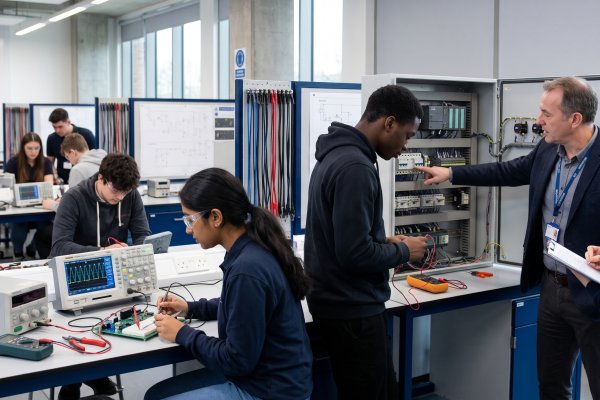
Through practical laboratory activities, engineering projects, technical assignments and applied learning, students develop the ability to analyse engineering problems, interpret technical information and contribute to the development and maintenance of engineering systems.
The Pearson BTEC Level 5 Higher National Diploma is a 240-credit qualification comprising Level 4 and Level 5 study. It provides a vocational pathway towards employment and further undergraduate education in electrical and electronic engineering and related disciplines.
What Will You Study?
The HND in Electrical and Electronic Engineering covers a range of engineering subjects designed to develop a strong technical foundation.
Level 4 Modules
Engineering Design: Learn how to identify engineering requirements, develop design solutions and communicate technical ideas using appropriate engineering methods.
Engineering Mathematics: Develop mathematical skills required for engineering calculations, circuit analysis and technical problem-solving.
Engineering Science: Explore fundamental scientific principles relating to electrical, electronic and mechanical engineering systems.
Electrical and Electronic Principles: Understand electrical circuits, electronic components, circuit behaviour and fundamental electrical engineering concepts.
Engineering Project: Develop project planning, research, implementation and evaluation skills through an engineering-related project.
Electrical and Electronic Circuits and Devices: Explore circuit components, electronic devices, circuit construction and practical applications.
Commercial Programming Software: Understand the use of programming and digital tools in engineering applications.
Automation, Robotics and Programmable Logic Controllers (PLCs): Learn the fundamentals of industrial automation, control systems and programmable logic technologies.
Level 5 Modules
The Level 5 programme develops more advanced engineering knowledge through subjects such as:
Professional Engineering Management: Explore project management, professional responsibilities, engineering leadership and organisational practices.
Further Mathematics: Apply advanced mathematical methods to solve complex engineering problems.
Further Programmable Logic Controllers (PLCs): Develop advanced knowledge of industrial automation, programmable control and engineering applications.
Further Electrical Machines and Drives: Understand the operation, performance and applications of electrical machines, motors and drive systems.
Industrial Power, Electronics and Storage: Explore industrial electrical power systems, electronic technologies and energy storage applications.
Embedded Systems: Understand the design and application of embedded electronic systems in modern engineering products.
Further Electrical, Electronic and Digital Principles: Develop advanced knowledge of electrical, electronic and digital engineering concepts.
Utilisation of Electrical Power: Examine how electrical power is generated, distributed, controlled and used in industrial and commercial environments.
The specialist unit combination should be confirmed against the college's approved Pearson qualification and selected programme structure.
Who Is This Course For?
The HND in Electrical and Electronic Engineering is suitable for individuals interested in developing a career in electrical engineering, electronics, industrial automation and related technical industries.
It may be particularly suitable for:
School and college leavers with relevant Level 3 qualifications.
Students interested in electrical and electronic engineering.
Individuals with a background in mathematics, physics or engineering.
Learners interested in industrial automation and control systems.
Technicians seeking to strengthen their engineering knowledge.
Students planning to progress to a bachelor's degree in electrical or electronic engineering.
Applicants should have an interest in mathematics, science, technology and practical engineering problem-solving.
Entry Requirements
Entry requirements vary depending on the college and the applicant's academic background.
Typical qualifications accepted by UK providers may include:
Relevant A-level qualifications, particularly in Mathematics or Physics.
BTEC Level 3 qualifications in Engineering or a related subject.
T Levels in relevant engineering disciplines.
An Access to Higher Education Diploma in an appropriate subject.
Equivalent international academic qualifications.
Relevant professional or technical experience, subject to institutional assessment.
Applicants may also need to demonstrate competence in English and mathematics at GCSE Level 2 or equivalent.
International applicants should confirm their accepted academic qualifications and English language requirements. Some institutions may require IELTS 5.5 overall or an equivalent qualification, although requirements vary between providers.
Practical Learning and Engineering Experience
Practical learning is an important component of electrical and electronic engineering education. Students develop an understanding of how engineering theories are applied to real systems, equipment and industrial applications.
Depending on the teaching institution, practical learning may include:
Electrical circuit construction and testing.
Electronic component analysis.
Electrical machine and motor experiments.
Programmable Logic Controller (PLC) programming.
Industrial automation exercises.
Power system analysis.
Embedded system development.
Engineering design and technical projects.
Laboratory investigations and technical reporting.
These activities help students connect theoretical engineering principles with practical applications and develop confidence in solving technical problems.
Skills You Will Develop
Throughout the programme, students can develop a range of technical, analytical and professional skills, including:
Electrical circuit analysis and testing
Electronic systems and component knowledge
Engineering mathematics and calculations
Electrical machines and motor control
Industrial automation and PLC programming
Power electronics and energy systems
Embedded systems and digital technologies
Engineering design and project management
Technical communication and reporting
Problem-solving and analytical thinking
These transferable skills can support professional development across electrical engineering, manufacturing, energy and technology industries.
Career Opportunities
The HND in Electrical and Electronic Engineering can provide a foundation for exploring employment opportunities across engineering and technology sectors.
Potential career pathways include:
Electrical Engineering Technician
Electronic Engineering Technician
Electrical Design Technician
Engineering Project Technician
Maintenance Engineering Technician
Automation and Control Technician
Electrical Systems Technician
Manufacturing Engineering Technician
Power Engineering Technician
Testing and Commissioning Technician
Career progression depends on practical experience, technical competence and employer requirements. Certain engineering roles may require additional qualifications, professional registration or relevant industry experience.
Progression to Further Study
Successful completion of the HND may provide opportunities to progress to a bachelor's degree in electrical engineering, electronic engineering or a related discipline.
Potential progression routes include:
BEng (Hons) Electrical Engineering
BEng (Hons) Electronic Engineering
BEng (Hons) Electrical and Electronic Engineering
BEng (Hons) Electrical Power Engineering
BEng (Hons) Control and Automation Engineering
BEng (Hons) Engineering Design
Some universities may offer advanced entry to further undergraduate study, subject to credit recognition and their individual admission requirements.
Students should confirm the available progression routes and professional accreditation arrangements with their intended university before enrolling.
Course Duration and Study Mode
The Pearson BTEC Level 5 Higher National Diploma in Electrical and Electronic Engineering for England is a 240-credit qualification comprising Level 4 and Level 5 study.
The programme is commonly delivered over two years on a full-time basis. However, some colleges offer one-year progression routes for eligible HNC graduates or part-time programmes lasting three years.
Depending on the institution, teaching may include classroom lectures, engineering laboratories, practical workshops, technical projects, independent study and coursework-based assessments.
Tuition Fees and Intakes
Tuition fees depend on the teaching institution, study location, applicant category and academic year.
Some UK colleges offer September entry, while other institutions may provide additional intake opportunities or part-time admission arrangements.
International applicants should confirm whether the selected college accepts overseas students and whether the programme is available for their intended study route.
Prospective students should check the latest tuition fees, application deadlines, entry requirements and available start dates directly with their chosen college.
Why Study Electrical and Electronic Engineering in the UK?
Electrical and electronic engineering supports many of the technologies and infrastructure systems used in modern society. From renewable energy and industrial automation to electronic devices and transportation, skilled engineers contribute to technological development and industrial progress.
Studying an HND in Electrical and Electronic Engineering can help learners develop practical technical knowledge, engineering problem-solving abilities and professional skills.
The qualification offers a vocational pathway for students who want to develop an engineering career while retaining opportunities for further university study.
Whether your ambition is to work in electrical systems, industrial automation, electronics or power engineering, this qualification can provide a valuable foundation.
Get Guidance on Studying Electrical and Electronic Engineering in the UK
Choosing the right engineering qualification involves comparing course content, specialist modules, entry requirements, tuition fees, study locations and future degree progression opportunities.
Our education consultancy can help prospective students explore suitable UK study options, understand admission requirements and prepare for the application process.
Contact our team for guidance on the HND in Electrical and Electronic Engineering and available opportunities to study in the UK.