BSc (Hons) Psychology with Counselling UK | Degree
Course Overview
The BSc (Hons) Psychology with Counselling is an undergraduate degree programme designed to develop a comprehensive understanding of human behaviour, psychological processes, mental health and counselling approaches.
Psychology explores how people think, feel and behave, while counselling focuses on understanding individuals' emotional experiences, personal challenges and relationships. Combining these disciplines provides students with valuable insights into human development, psychological wellbeing and the ways people respond to different life experiences.
Mental health and emotional wellbeing have become increasingly important across healthcare, education, social care and community services. Organisations need professionals who understand human behaviour, communicate effectively and recognise the psychological factors that influence individuals and communities.
This programme combines the scientific study of psychology with an applied understanding of counselling theories and interpersonal skills. Students explore how psychological knowledge can be used to understand emotional difficulties, human relationships, mental health conditions and personal development.
Throughout the degree, students study important areas such as cognitive psychology, biological psychology, developmental psychology, social psychology, abnormal psychology, counselling theories, therapeutic communication and psychological research methods.
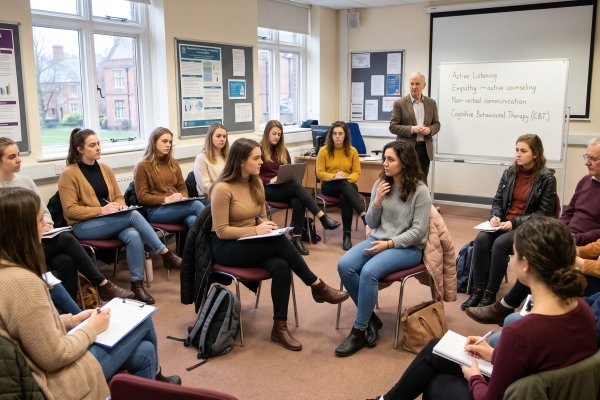
Through lectures, seminars, practical activities, research assignments, case studies and applied learning, students develop the ability to analyse human behaviour, evaluate psychological evidence and understand different counselling perspectives.
The programme also develops essential professional skills in active listening, empathy, communication, critical thinking, reflective practice, ethical awareness and problem-solving.
The BSc (Hons) Psychology with Counselling is particularly suitable for individuals interested in psychology, mental health, counselling-related services, therapeutic support, social care, education and other people-focused professions.
What Will You Study?
The BSc (Hons) Psychology with Counselling is generally delivered over three years of full-time undergraduate study, divided into three academic levels.
Year 1 – Level 4
The first year introduces students to the fundamental principles of psychology, human behaviour and counselling.
Key areas of study include:
Introduction to Psychology: Explore the main perspectives in psychology and understand how psychological research explains human thoughts, emotions and behaviour.
Biological Psychology: Examine the relationship between the brain, nervous system, hormones and human behaviour, including the biological foundations of emotions and cognition.
Cognitive Psychology: Understand mental processes such as memory, attention, perception, learning, language and decision-making.
Developmental Psychology: Explore psychological development throughout life, including childhood, adolescence, adulthood and ageing.
Introduction to Counselling: Understand the purpose of counselling, basic therapeutic principles, helping relationships and the importance of effective communication.
Psychological Research Methods: Learn how psychologists design research studies, collect information, evaluate evidence and interpret research findings.
Social Psychology: Examine how individuals think, feel and behave in social situations and how relationships, groups and society influence human behaviour.
Year 2 – Level 5
The second year develops specialist knowledge of psychological processes, counselling approaches and mental health.
Key areas of study include:
Abnormal Psychology and Mental Health: Explore psychological disorders, emotional difficulties, mental health conditions and different approaches to understanding psychological distress.
Counselling Theories and Approaches: Study different counselling perspectives, including person-centred, cognitive behavioural, psychodynamic and integrative approaches.
Counselling Skills and Techniques: Develop an understanding of active listening, empathy, questioning, reflection, interpersonal communication and supportive helping relationships.
Psychobiology and Neuroscience: Examine the biological foundations of behaviour, brain functioning, psychological processes and mental health.
Individual Differences and Personality: Explore personality, intelligence, motivation and the psychological differences that influence individual behaviour.
Research Methods and Data Analysis: Develop quantitative and qualitative research skills and learn how psychological evidence is collected, analysed and interpreted.
Ethical Issues in Psychology and Counselling: Understand confidentiality, professional boundaries, informed consent, safeguarding and ethical responsibilities in people-focused settings.
Year 3 – Level 6
The final year develops advanced psychological knowledge, applied counselling understanding and independent research skills.
Key areas of study include:
Advanced Counselling and Therapeutic Approaches: Explore how different counselling theories and therapeutic approaches can be applied to understand emotional and psychological difficulties.
Counselling in Practice: Examine the application of counselling principles, therapeutic communication, reflective practice and professional boundaries.
Clinical and Health Psychology: Understand psychological factors affecting physical and mental health, wellbeing, illness and recovery.
Forensic Psychology: Explore psychological theories relating to criminal behaviour, offending, victimisation and the justice system.
Cognitive and Applied Psychology: Examine advanced psychological processes and their applications in everyday life and professional settings.
Psychological Research Project: Conduct an independent research investigation into a relevant psychological or counselling-related topic using appropriate research methods.
Professional Development and Reflective Practice: Develop awareness of professional responsibilities, career pathways and the importance of continued learning.
The precise module titles and optional subjects depend on the university's approved programme specification and academic year.
Who Is This Course For?
The BSc (Hons) Psychology with Counselling is suitable for individuals who are interested in understanding human behaviour, emotional wellbeing and the psychological factors influencing people's lives.
It may be particularly suitable for:
School and college leavers interested in psychology.
Students interested in mental health and emotional wellbeing.
Individuals interested in counselling and therapeutic approaches.
Learners interested in human behaviour and relationships.
Students considering careers in mental health and social care.
Individuals interested in psychological research.
Students interested in educational and community support services.
People-focused individuals who want to develop communication and interpersonal skills.
Mature learners seeking an undergraduate qualification in psychology.
Previous professional counselling experience is not generally required for undergraduate entry. However, an interest in human behaviour, communication, empathy and psychological research can be beneficial.
Entry Requirements
Entry requirements vary depending on the university and the applicant's academic background.
For Bournemouth University's BSc (Hons) Psychology with Counselling programme, the published September 2027 entry requirements include:
UCAS Tariff: 112–128 points.
A-level qualifications: BBC–ABB.
BTEC Extended Diploma: DMM–DDM.
T Levels: Merit.
At least two A-levels or equivalent qualifications.
GCSE English Language or English Literature: Grade 4/C.
GCSE Mathematics: Grade 4/C.
Bournemouth University considers a range of academic subjects for admission, and applicants from different educational backgrounds may be considered.
Applicants who do not meet the standard entry requirements may be able to apply for the integrated foundation-year route, subject to the university's admission criteria.
International applicants should check the university's country-specific academic equivalencies before applying.
English Language Requirements
International applicants must demonstrate sufficient English language proficiency to participate in undergraduate academic study.
For Bournemouth University's September 2027 entry, the published English language requirement is:
IELTS Academic: 6.0 overall.
No individual component below 5.5.
Equivalent English language qualifications may also be accepted under the university's admissions policy.
Applicants should confirm the latest English language requirements before submitting an application.
Practical Learning and Counselling Experience
Practical learning is an important component of psychology and counselling education. Students develop an understanding of how psychological knowledge and interpersonal skills can be applied in real-world situations.
Depending on the university's facilities and curriculum, practical learning may include:
Analysing psychological case studies.
Exploring different counselling theories and approaches.
Developing active listening and communication skills.
Participating in reflective learning activities.
Understanding therapeutic relationships and professional boundaries.
Conducting psychological research and data analysis.
Exploring mental health and wellbeing scenarios.
Examining the psychological impact of social and environmental factors.
Participating in practical psychology laboratory activities.
Completing research-based assignments and projects.
Engaging in supervised work experience or placement opportunities where available.
Bournemouth University offers opportunities for industry experience through shorter placements and a longer placement route. Students may also have the option to undertake the CPCAB Level 3 Certificate in Counselling Studies, subject to the university's arrangements.
These opportunities help students develop a stronger understanding of professional environments and the importance of ethical and effective communication.
Skills You Will Develop
Throughout the programme, students can develop a range of academic, interpersonal and professional skills, including:
Understanding human behaviour and psychological processes
Counselling theories and therapeutic approaches
Active listening and interpersonal communication
Empathy and emotional awareness
Psychological research and data analysis
Critical thinking and evidence evaluation
Mental health and wellbeing awareness
Reflective practice and self-awareness
Ethical decision-making and confidentiality
Understanding individual and social differences
Communication and relationship-building
Problem-solving and professional teamwork
These transferable skills can support career development across mental health services, education, social care, community organisations and other people-focused professions.
Career Opportunities
The BSc (Hons) Psychology with Counselling can provide an academic foundation for exploring employment opportunities in psychology-related, mental health, social care and other professional sectors.
Potential career pathways include:
Psychology Assistant
Mental Health Support Worker
Counselling Support Worker
Psychological Wellbeing Assistant
Community Support Worker
Rehabilitation Support Worker
Social Care Worker
Youth Support Worker
Wellbeing Coordinator
Behaviour Support Assistant
Research Assistant in Psychology
Educational Support Worker
Human Resources Assistant
Community Development Officer
Assistant Practitioner in relevant support settings
With further postgraduate education, professional training and supervised experience, graduates may explore specialist pathways in counselling, psychotherapy, clinical psychology, counselling psychology, educational psychology and other psychological professions.
Professional registration and eligibility requirements vary by occupation.
Professional Accreditation and Recognition
Professional accreditation is an important consideration when choosing a psychology degree.
The British Psychological Society (BPS) is the professional body for psychology in the UK.
Bournemouth University's BSc (Hons) Psychology with Counselling is accredited by the BPS. Graduates who achieve at least a Second Class Honours degree can be eligible for the Graduate Basis for Chartered Membership (GBC), subject to meeting the applicable accreditation requirements.
GBC provides an important academic foundation for students who wish to pursue further professional training in psychology.
The programme also provides an opportunity to explore additional counselling-related learning through the CPCAB Level 3 Certificate in Counselling Studies, subject to university arrangements.
Important: BPS accreditation does not automatically qualify graduates to practise as counsellors, psychotherapists or clinical psychologists. These professions require additional specialist training, supervised practice and, where applicable, professional registration.
Progression to Further Study
After successfully completing the BSc (Hons) Psychology with Counselling, graduates may consider postgraduate education in psychology, counselling and related disciplines.
Potential progression routes include:
MSc Counselling Psychology
MSc Clinical Psychology
MSc Health Psychology
MSc Applied Psychology
MSc Forensic Psychology
MSc Mental Health Studies
MSc Psychological Research Methods
MSc Developmental Psychology
MSc Educational Psychology
Postgraduate Diploma in Counselling
Professional Counselling Training Programmes
Psychotherapy Training Programmes
Admission to postgraduate programmes depends on the university's academic requirements, professional experience and relevant accreditation criteria.
Course Duration and Study Mode
The BSc (Hons) Psychology with Counselling at Bournemouth University offers several full-time study options.
The programme structure includes:
Standard degree: 3 years full-time.
Degree with longer placement: 4 years full-time, including a minimum 30-week placement.
Standard degree with foundation year: 4 years full-time.
Foundation year with longer placement: 5 years full-time.
Teaching may include lectures, seminars, tutorials, psychology laboratory activities, practical workshops, research assignments, presentations, case studies and independent study.
Tuition Fees and Intakes
Tuition fees depend on the academic year, applicant category, study route and placement arrangement.
For Bournemouth University's September 2027 entry, the published international tuition fee is £18,635 per year.
The foundation-year international fee is also listed separately, and placement-year fees follow a separate arrangement.
The university offers September entry for this programme.
International applicants should confirm the latest tuition fees, available study routes, application deadlines, payment arrangements, placement eligibility and overseas admission requirements directly with Bournemouth University.
Why Study Psychology with Counselling in the UK?
The UK offers a well-established higher education environment for studying psychology, mental health and counselling-related subjects.
Studying Psychology with Counselling in the UK provides an opportunity to understand human behaviour, explore psychological research and develop interpersonal skills relevant to a wide range of professional environments.
The combination of psychology and counselling offers a broader perspective on emotional wellbeing, human relationships and the factors influencing mental health.
The programme is particularly valuable for students who want to combine scientific psychological knowledge with an applied understanding of counselling approaches.
Whether your ambition is to work in mental health support, psychological research, social care, education or pursue further professional training in counselling and psychology, this degree can provide a valuable academic foundation.
Get Guidance on Studying Psychology with Counselling in the UK
Choosing the right psychology degree involves comparing university options, BPS accreditation, counselling modules, practical learning opportunities, placements, entry requirements, tuition fees and future professional pathways.
Our education consultancy can help prospective students explore suitable UK university options, understand admission requirements and prepare for the application process.
Contact our team for guidance on the BSc (Hons) Psychology with Counselling and available opportunities to study in the UK.


