BSc Adult Nursing with Foundation Year UK | 4 Years
Course Overview
The BSc (Hons) Nursing (Adult) with Foundation Year is an undergraduate nursing programme designed to prepare students with the knowledge, clinical skills and professional values required to provide safe, compassionate and effective care for adults across different healthcare settings.
Adult nursing plays an essential role in modern healthcare, supporting individuals with acute and long-term health conditions, promoting recovery, preventing illness and improving quality of life. Adult nurses work in hospitals, community healthcare services, primary care settings, residential facilities and other healthcare environments.
The programme begins with a foundation year that helps students develop the academic knowledge, communication abilities and study skills required for successful progression into professional nursing education.
Following the foundation year, students undertake specialist adult nursing education, exploring human health, clinical assessment, nursing practice, pharmacology, patient safety, health promotion and evidence-based care.
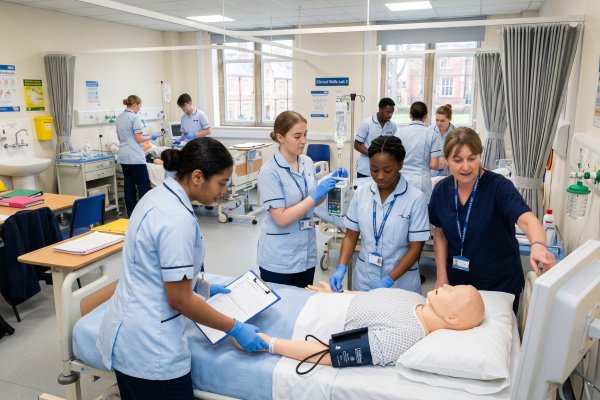
Through a combination of university-based learning, clinical simulation, practical skills training and supervised healthcare placements, students develop the ability to assess patient needs, plan appropriate care, support recovery and work effectively with multidisciplinary healthcare teams.
The programme is designed to provide a pathway towards professional adult nursing practice. Successful completion of the approved nursing degree and satisfaction of the Nursing and Midwifery Council (NMC) requirements make graduates eligible to apply for registration as adult nurses in the UK.
What Will You Study?
The BSc (Hons) Nursing (Adult) with Foundation Year combines one foundation year with three years of specialist undergraduate nursing education.
Foundation Year – Preparing for Nursing Education
The foundation year provides an introduction to higher education and develops the academic and professional skills required for nursing study.
Typical areas of study include:
Introduction to Human Biology: Understand the basic structure and functions of the human body and develop foundational knowledge relevant to healthcare.
Introduction to Health and Social Care: Explore the organisation of healthcare services and the role of health and social care professionals.
Academic and Study Skills: Develop academic writing, research, referencing, communication and independent learning abilities.
Introduction to Psychology and Sociology: Understand how psychological, social and behavioural factors influence health and wellbeing.
Professional Communication: Develop effective communication, teamwork and interpersonal skills relevant to patient care.
Introduction to Nursing Practice: Explore the fundamental principles of compassionate care, patient safety and professional nursing responsibilities.
Year 1 – Level 4
The first year of the main nursing degree introduces students to fundamental nursing knowledge and practical healthcare skills.
Key areas of study include:
Foundations of Nursing Practice: Understand the fundamental principles of nursing care, professional accountability and person-centred practice.
Anatomy and Physiology: Explore the structure and functioning of major body systems and their relationship to health and disease.
Fundamental Nursing Skills: Develop essential clinical skills, including patient observations, personal care, infection prevention and basic patient assessment.
Introduction to Pharmacology: Understand the principles of medicines management, medication safety and the responsibilities of nurses.
Health Promotion: Explore strategies for preventing illness, encouraging healthy lifestyles and improving individual wellbeing.
Communication in Healthcare: Develop effective communication skills when working with patients, families and multidisciplinary teams.
Clinical Practice Learning: Apply theoretical knowledge in supervised healthcare settings and develop professional nursing competencies.
Year 2 – Level 5
The second year develops students' clinical knowledge and ability to provide more complex adult nursing care.
Key areas of study include:
Assessment and Management of Adult Health Conditions: Develop knowledge of assessing and supporting adults with a range of acute and long-term conditions.
Pathophysiology: Understand the biological processes associated with illness, disease progression and changes in normal body functioning.
Evidence-Based Nursing Practice: Learn how research evidence and clinical guidelines inform safe and effective nursing decisions.
Pharmacology and Medicines Management: Develop a deeper understanding of medication administration, therapeutic effects and patient safety.
Mental Health and Wellbeing in Adult Nursing: Understand the relationship between physical and psychological health and support individuals with diverse care needs.
Acute and Chronic Care Management: Explore nursing approaches for patients experiencing sudden illness and long-term health conditions.
Clinical Practice Development: Strengthen practical nursing skills through supervised placements and professional reflection.
Year 3 – Level 6
The final year develops advanced clinical reasoning, professional leadership and decision-making skills.
Key areas of study include:
Complex Adult Nursing Practice: Explore the care of adults with multiple, complex and long-term health conditions.
Clinical Leadership and Management: Develop leadership, delegation, teamwork and professional decision-making skills.
Quality Improvement and Patient Safety: Understand strategies for improving healthcare quality, reducing risks and promoting patient safety.
Advanced Clinical Assessment: Develop the ability to assess patient conditions, recognise deterioration and contribute to appropriate care planning.
Research and Evidence-Based Practice: Critically evaluate research and apply evidence to clinical nursing practice.
Public Health and Nursing: Explore the contribution of adult nurses to disease prevention, health promotion and reducing health inequalities.
Independent Research or Practice Development Project: Investigate a relevant nursing issue and develop evidence-based recommendations for improving patient care.
The exact module titles and structure depend on the university's approved curriculum and academic year.
Who Is This Course For?
The BSc (Hons) Nursing (Adult) with Foundation Year is suitable for individuals who want to build a professional career in adult healthcare and nursing.
It may be particularly suitable for:
School and college leavers interested in nursing.
Students who do not currently meet the direct-entry requirements for a nursing degree.
Individuals interested in hospital and community healthcare.
Healthcare assistants and support workers seeking professional development.
Individuals interested in patient care and health promotion.
Mature learners considering a career change into nursing.
Students who want additional academic preparation before beginning professional nursing education.
The foundation year provides an alternative route for applicants who need additional preparation before progressing to the main adult nursing degree.
Entry Requirements
Entry requirements vary depending on the university and applicant's educational background.
Typical foundation year entry qualifications may include:
A-level qualifications or equivalent.
BTEC Level 3 qualifications.
Other recognised Level 3 qualifications.
Relevant international academic qualifications.
Relevant professional or personal experience, where accepted by the university.
Some universities consider applicants with fewer formal qualifications if they can demonstrate relevant experience, motivation and commitment to nursing.
GCSE Requirements
Depending on the university, applicants may need:
GCSE English Language at grade C/4 or equivalent.
GCSE Mathematics at grade C/4 or equivalent.
GCSE Science at grade C/4 or equivalent.
Alternative Level 2 qualifications may be accepted by some institutions.
English Language Requirements
International applicants must demonstrate the English language proficiency needed for safe communication and academic study.
Universities may accept IELTS Academic or equivalent qualifications. Requirements vary by institution and may include an overall IELTS score of 6.0–7.0, with specified minimum component scores.
Applicants should check the university's specific nursing English language requirements before applying.
Additional Nursing Admission Requirements
Because nursing is a regulated profession, applicants may also need to complete:
A nursing admission interview.
A satisfactory Enhanced Disclosure and Barring Service (DBS) check.
Occupational health screening.
A declaration of good health and good character.
Relevant immunisation and vaccination assessments.
Additional suitability checks required for clinical placements.
Successful completion of the foundation year does not automatically guarantee entry to the professional nursing degree at every university. Progression may depend on academic performance, interview results, available places and satisfactory background and health checks.
Clinical Placements and Practical Learning
Clinical placement experience is a central component of adult nursing education. Students develop the practical abilities and professional confidence required to provide safe and effective patient care.
Depending on the university and programme structure, placements may take place in:
NHS hospitals.
Medical and surgical wards.
Community healthcare services.
General practice and primary care settings.
Rehabilitation facilities.
Older adult care services.
Specialist healthcare departments.
During supervised clinical learning, students may develop experience in:
Measuring and monitoring vital signs.
Patient assessment and observation.
Supporting personal care and daily activities.
Infection prevention and control.
Safe medicines management.
Wound care and clinical procedures within their level of competence.
Communicating with patients and families.
Recognising and reporting patient deterioration.
Supporting rehabilitation and recovery.
Working with multidisciplinary healthcare teams.
Clinical activities are undertaken under appropriate supervision and in accordance with the student's stage of training and professional requirements.
Skills You Will Develop
Throughout the programme, students can develop a range of clinical, academic and professional skills, including:
Patient assessment and clinical observation.
Adult nursing care and care planning.
Anatomy, physiology and pathophysiology.
Pharmacology and medicines management.
Infection prevention and patient safety.
Evidence-based clinical decision-making.
Health promotion and disease prevention.
Communication and interpersonal skills.
Clinical reasoning and problem-solving.
Teamwork and multidisciplinary collaboration.
Professional accountability and ethical practice.
Leadership and healthcare management.
These skills support the development of competent and compassionate nursing professionals.
Career Opportunities
Successful completion of the approved nursing degree and the relevant NMC registration requirements can lead to professional opportunities in adult nursing.
Potential career pathways include:
Registered Adult Nurse
Staff Nurse
Hospital Ward Nurse
Community Adult Nurse
Medical Ward Nurse
Surgical Ward Nurse
Rehabilitation Nurse
Older Adult Care Nurse
Outpatient Department Nurse
Primary Care Nurse
Specialist Nursing Roles following additional experience and training
Clinical Nurse Leadership roles with further experience
Adult nurses may work in NHS organisations, independent hospitals, community healthcare services, nursing homes and other healthcare providers.
Career progression may include specialist nursing, clinical education, nursing leadership, healthcare management and postgraduate study.
Professional Registration with the NMC
The Nursing and Midwifery Council (NMC) regulates nurses and midwives in the United Kingdom.
To practise as a registered adult nurse in the UK, students must complete an NMC-approved nursing programme and satisfy the relevant registration requirements.
The foundation year is a preparatory academic stage and is generally not itself NMC-approved. Professional nursing education and clinical practice requirements apply to the subsequent approved nursing degree.
Successful completion of the approved degree does not remove the requirement to satisfy the NMC's registration procedures, including health and character requirements.
Applicants should verify that their selected university's adult nursing programme is currently approved by the NMC.
Progression to Further Study
After completing the BSc (Hons) Nursing (Adult) degree, graduates may consider further professional and academic development.
Potential progression routes include:
MSc Advanced Clinical Practice
MSc Adult Nursing
MSc Clinical Nursing
MSc Public Health
MSc Healthcare Leadership and Management
MSc Nursing Education
MSc Global Health
Postgraduate Certificates in Specialist Nursing Practice
Further study and specialist practice opportunities depend on relevant professional registration, clinical experience and individual university requirements.
Course Duration and Study Mode
The BSc (Hons) Nursing (Adult) with Foundation Year is generally delivered over four years on a full-time basis.
The programme structure consists of:
Foundation Year: Academic preparation and foundational healthcare knowledge.
Year 1: Level 4 undergraduate nursing education.
Year 2: Level 5 undergraduate nursing education.
Year 3: Level 6 undergraduate nursing education.
The programme combines university-based lectures, seminars, simulation-based learning, clinical skills training, independent study and supervised practice placements.
Students should be prepared for clinical placements that may involve early mornings, evenings, weekends and shift-based attendance.
Tuition Fees and Intakes
Tuition fees depend on the university, academic year, campus and applicant category.
UK and international tuition fees can differ considerably. Nursing courses may also involve additional costs relating to uniforms, travel to clinical placements, occupational health checks and other programme requirements.
Universities may offer September, January or other entry points, depending on the course.
International applicants should confirm whether the selected university accepts overseas students for the foundation year and the subsequent professional nursing programme.
Prospective students should verify the current tuition fees, available intakes, admission deadlines and clinical placement arrangements directly with their chosen university.
Why Study Adult Nursing in the UK?
Adult nursing is an important profession within the UK's healthcare system, supporting individuals across hospitals, community services and other healthcare environments.
Studying adult nursing in the UK provides an opportunity to develop clinical knowledge, practical skills and professional values through a combination of academic education and supervised clinical experience.
The integrated foundation year provides an alternative entry route for individuals who need additional academic preparation before beginning professional nursing education.
Whether your ambition is to work in a hospital, community healthcare service or specialist clinical setting, this degree can provide a pathway towards a rewarding career in adult nursing.
Get Guidance on Studying Adult Nursing in the UK
Choosing the right adult nursing programme involves comparing university options, NMC approval, foundation year progression requirements, clinical placements, entry criteria, tuition fees and international admission arrangements.
Our education consultancy can help prospective students explore suitable UK university options, understand admission requirements and prepare for the application process.
Contact our team for guidance on the BSc (Hons) Nursing (Adult) with Foundation Year and available opportunities to study in the UK.