BSc (Hons) Computer Science UK | Computer Science Degree
Course Overview
The BSc (Hons) Computer Science is an undergraduate degree programme designed to develop the technical knowledge, programming abilities and analytical skills required to build a successful career in the rapidly evolving computing and technology industry.
Computer science is at the heart of modern technological innovation. From software applications and artificial intelligence to cloud computing, data science and intelligent systems, computing technologies influence almost every aspect of contemporary life. Organisations across the world depend on skilled computing professionals to develop software, manage information systems, solve complex problems and create innovative digital solutions.
This programme provides students with a comprehensive understanding of the theoretical and practical foundations of computer science. It combines programming, mathematics, algorithms, computer systems and software engineering with opportunities to explore emerging technologies.
During the programme, students study important areas such as programming languages, data structures, algorithms, database management, computer networks, operating systems, software development, artificial intelligence and web technologies.
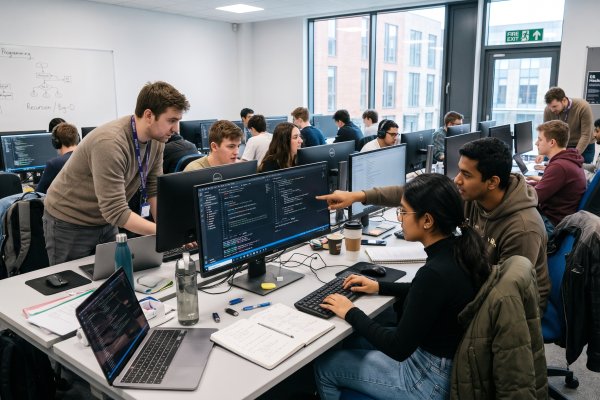
Through practical laboratory sessions, programming assignments, software development projects, technical workshops and independent research, students develop the ability to design, develop, test and maintain computing applications and systems.
The programme also strengthens professional skills in critical thinking, teamwork, communication, project management and technical problem-solving.
The BSc (Hons) Computer Science is particularly suitable for individuals interested in software development, computer programming, artificial intelligence, data science, systems analysis and other careers within the global technology industry.
What Will You Study?
The BSc (Hons) Computer Science is generally delivered over three years of full-time undergraduate study, divided into three academic levels.
Year 1 – Level 4
The first year introduces students to the fundamental principles of computer science, programming and computing technologies.
Key areas of study include:
Fundamentals of Computer Science: Understand the basic principles of computing, information processing, computational systems and the role of computer science in modern society.
Programming Fundamentals: Learn programming concepts, variables, data types, control structures, functions and logical problem-solving techniques.
Object-Oriented Programming: Explore classes, objects, inheritance, encapsulation and other principles used in modern software development.
Data Structures and Algorithms: Understand how data is organised, stored and processed, and how algorithms solve computational problems.
Computer Systems and Architecture: Explore computer hardware, processors, memory, operating systems and the fundamental components of computing systems.
Database Fundamentals: Learn how databases are designed, organised and managed to store and retrieve information efficiently.
Web Technologies: Develop an understanding of web development, internet technologies, website structures and interactive digital applications.
Year 2 – Level 5
The second year develops more advanced technical knowledge and practical software development skills.
Key areas of study include:
Software Engineering: Explore software development methodologies, requirements analysis, system design, testing and software maintenance.
Advanced Programming: Develop more complex programming applications using appropriate programming languages and development frameworks.
Advanced Data Structures and Algorithms: Examine algorithm design, computational complexity, searching, sorting and efficient data processing.
Database Development and Management: Develop knowledge of relational databases, SQL, database design and information management.
Computer Networks: Understand network architecture, communication protocols, internet technologies and distributed computing.
Operating Systems: Explore process management, memory management, file systems and the principles governing modern operating systems.
Artificial Intelligence Fundamentals: Understand intelligent systems, machine learning concepts, automated decision-making and the applications of artificial intelligence.
Group Software Development Project: Work collaboratively to plan, design, develop, test and present a software solution.
Year 3 – Level 6
The final year develops advanced computer science knowledge, independent research capabilities and specialist technical skills.
Key areas of study include:
Advanced Software Engineering: Explore complex software architectures, advanced development methodologies and the management of large software projects.
Artificial Intelligence and Machine Learning: Examine intelligent algorithms, machine learning techniques, predictive models and practical AI applications.
Cloud Computing and Distributed Systems: Understand cloud infrastructure, distributed applications, scalability and modern computing environments.
Advanced Data Science and Analytics: Explore data processing, statistical analysis, data visualisation and computational approaches to extracting useful information.
Cyber Security and Information Protection: Understand computer system vulnerabilities, network protection, secure software development and information security principles.
Human-Computer Interaction: Examine how people interact with computer systems and how digital interfaces can be designed to improve usability and accessibility.
Final Year Computer Science Project: Conduct an independent research or development project involving the design, implementation, testing and evaluation of a computing solution.
The exact module titles, specialist pathways and optional subjects depend on the university's approved programme specification and academic year.
Who Is This Course For?
The BSc (Hons) Computer Science is suitable for individuals interested in developing technical knowledge and pursuing careers in computing and digital technology.
It may be particularly suitable for:
School and college leavers interested in computer science.
Students interested in software development and programming.
Individuals interested in artificial intelligence and machine learning.
Learners interested in data science and database technologies.
Students interested in computer systems and network technologies.
Individuals interested in web and mobile application development.
Students who enjoy mathematics, logic and problem-solving.
IT professionals seeking further academic qualifications.
Mature learners interested in developing a career in the technology industry.
Previous professional programming experience is not generally required for undergraduate entry. However, an interest in mathematics, computing, logical reasoning and technology can be beneficial.
Entry Requirements
Entry requirements vary depending on the university and the applicant's academic background.
For Oxford Brookes University's standard BSc (Hons) Computer Science programme, applicants should meet the published academic requirements for the relevant year of entry.
Typical qualifications accepted by UK universities may include:
A-level qualifications or equivalent.
BTEC Level 3 qualifications in Computing, IT, Engineering or related subjects.
T Levels or other recognised Level 3 qualifications.
An Access to Higher Education Diploma.
International Baccalaureate qualifications.
Equivalent international academic qualifications.
Relevant professional or educational experience, where accepted by the university.
Many universities require an appropriate background in mathematics or demonstrate mathematical ability through previous qualifications.
Applicants should check the specific UCAS tariff, mathematics requirements and accepted international qualifications with their chosen university.
English Language Requirements
International applicants must demonstrate sufficient English language proficiency to participate in undergraduate academic study.
Universities may accept:
IELTS Academic.
Pearson Test of English (PTE).
Other recognised English language qualifications.
Equivalent evidence of previous education in English, where accepted.
Some UK universities require IELTS 6.0 overall with no individual component below 5.5, although requirements vary by institution.
Applicants should confirm the latest English language requirements before submitting an application.
Practical Learning and Industry Experience
Practical learning is an important component of computer science education. Students develop an understanding of how computing theories and programming principles are applied to real-world technical challenges.
Depending on the university's facilities and curriculum, practical learning may include:
Developing software applications using programming languages.
Designing and managing relational databases.
Building websites and interactive digital applications.
Implementing algorithms and data structures.
Developing object-oriented software.
Testing and debugging computer programs.
Working with artificial intelligence applications.
Exploring cloud computing technologies.
Analysing computer networks and operating systems.
Participating in collaborative software development projects.
Completing independent computing research.
Students may gain experience with programming languages and technologies such as Python, Java, C++, JavaScript, SQL, HTML, CSS and other industry-relevant tools, depending on the university's curriculum.
Some universities also offer opportunities for industrial placements, employer-led projects, technology workshops and professional networking.
These experiences help students develop practical computing skills and understand the expectations of employers in the technology sector.
Skills You Will Develop
Throughout the programme, students can develop a range of technical, analytical and professional skills, including:
Computer programming and software development
Object-oriented programming
Algorithms and data structures
Database design and management
Computer systems and architecture
Software engineering and testing
Artificial intelligence fundamentals
Data science and computational analysis
Web and application development
Computer networks and operating systems
Cloud computing and distributed systems
Critical thinking and technical problem-solving
Research, teamwork and professional communication
These transferable skills can support career development across software companies, financial institutions, technology organisations, government departments and other industries that rely on digital systems.
Career Opportunities
The BSc (Hons) Computer Science can provide an academic foundation for exploring employment opportunities across the global computing and technology industries.
Potential career pathways include:
Software Developer
Software Engineer
Computer Programmer
Web Developer
Application Developer
Systems Analyst
Database Administrator
Data Analyst
Artificial Intelligence Developer
Machine Learning Associate
Cloud Computing Engineer
Computer Network Engineer
Software Testing Engineer
IT Systems Administrator
Technical Support Engineer
Business Systems Analyst
With relevant professional experience, technical certifications and further development, graduates may progress into senior software engineering, systems architecture, artificial intelligence and technology management positions.
Some specialist roles may require additional industry certifications, practical experience or postgraduate qualifications.
Professional Recognition and Industry Opportunities
Professional recognition can be an important consideration when selecting a computer science degree.
The British Computer Society (BCS), The Chartered Institute for IT, is a recognised professional organisation supporting standards and professional development in computing and information technology.
Eligible BCS-accredited computing degrees may provide an academic foundation towards professional recognition, including Chartered IT Professional status, subject to the relevant academic and professional requirements.
Some universities also maintain relationships with technology companies and professional organisations, providing opportunities for industry engagement, practical projects and professional development.
Applicants should check the current accreditation status of their selected degree and exact year of entry. Accreditation of one programme at a university does not automatically apply to all its computing degrees.
Progression to Further Study
After successfully completing the BSc (Hons) Computer Science, graduates may consider postgraduate education in computer science and related technology disciplines.
Potential progression routes include:
MSc Advanced Computer Science
MSc Artificial Intelligence
MSc Data Science
MSc Software Engineering
MSc Cyber Security
MSc Machine Learning
MSc Cloud Computing
MSc Computer Networks
MSc Information Technology
MSc Human-Computer Interaction
MSc Big Data Analytics
MSc Robotics and Intelligent Systems
Postgraduate admission depends on the university's entry requirements, academic performance and relevant experience.
Course Duration and Study Mode
The BSc (Hons) Computer Science at Oxford Brookes University is offered over three years on a full-time basis.
The programme structure consists of:
Year 1: Level 4 – Programming fundamentals, computer systems and introductory computer science.
Year 2: Level 5 – Software engineering, databases, algorithms and advanced computing.
Year 3: Level 6 – Advanced computing, specialist subjects and independent research.
Some universities also offer an optional industrial placement year, which may extend the programme to four years.
Teaching may include lectures, seminars, programming workshops, computer laboratory sessions, group projects, independent study and technical assessments.
Tuition Fees and Intakes
Tuition fees depend on the university, academic year, campus, applicant category and study mode.
UK and international students may be charged different annual tuition fees. Optional placement years may also have a separate fee arrangement.
Universities commonly offer September entry, although selected institutions may provide additional start dates.
International applicants should confirm the latest tuition fees, available intakes, application deadlines, payment arrangements, placement eligibility and overseas admission requirements directly with their chosen university.
Why Study Computer Science in the UK?
The UK has a well-established higher education sector with universities offering computer science programmes that combine theoretical foundations, practical programming and exposure to emerging technologies.
Studying Computer Science in the UK can help learners develop technical knowledge, analytical abilities and practical skills relevant to the global digital economy.
The programme provides opportunities to explore software development, artificial intelligence, data science, computer networks and modern computing systems.
Whether your ambition is to become a software engineer, computer programmer, data analyst, artificial intelligence specialist or systems analyst, this degree can provide a valuable academic foundation for a career in technology.
Get Guidance on Studying Computer Science in the UK
Choosing the right computer science degree involves comparing university options, programming modules, specialist pathways, industry placements, professional accreditation, entry requirements, tuition fees and future career opportunities.
Our education consultancy can help prospective students explore suitable UK university options, understand admission requirements and prepare for the application process.
Contact our team for guidance on the BSc (Hons) Computer Science and available opportunities to study in the UK.


