University Interview Preparation: How to Prepare with Confidence
Getting invited to a university interview is an exciting step towards achieving your higher education goals. Whether you are applying for your first degree, returning to education as a mature student or changing your career direction, preparing properly can help you approach your interview with confidence.
A university interview gives admissions tutors an opportunity to learn more about you, your motivation, your experience and your suitability for the course. It is also your chance to demonstrate your enthusiasm and explain why you want to study at that particular university.
At LearnerCare Education, we understand that interviews can feel challenging, particularly if you have not attended one for several years. With the right preparation, practice and guidance, you can present yourself positively and make a strong impression.
Why Is a University Interview Important?
Some universities and courses use interviews as part of their admissions process. The purpose is to assess more than your academic qualifications.
During an interview, admissions tutors may want to understand:
Why you have chosen the course and university.
Whether you understand the subject you want to study.
What motivates you to pursue higher education.
Your communication and interpersonal skills.
Your ability to think critically and express ideas.
How your previous education, employment or life experience relates to your chosen course.
Whether you are prepared for the demands of university study.
For mature applicants, professional experience, transferable skills and personal motivation can be particularly relevant. You do not necessarily need a traditional academic background to demonstrate that you are ready for university.
How to Prepare for Your University Interview
Good preparation can make a significant difference to how confidently you answer questions. Here are some practical steps to help you get ready.
1. Research Your University and Course
Before attending your interview, take time to understand the university and the course you have applied for.
Read the course description, review the modules and consider what interests you most about the subject. Think about how the qualification could support your academic and career ambitions.
You should be able to explain:
Why you selected this particular course.
Why you want to study at this university.
Which subjects or modules interest you most.
How the qualification connects with your future plans.
Avoid memorising generic answers. Interviewers want to hear genuine reasons that reflect your own interests and ambitions.
2. Practise Common University Interview Questions
Many university interviews include questions about your background, motivation, strengths and future goals.
Practising your answers beforehand can help you organise your thoughts and avoid feeling overwhelmed.
Here are some common questions to consider:
Why do you want to study this course?
Explain what interests you about the subject and how it relates to your personal or professional ambitions.
Why have you chosen this university?
Discuss relevant course features, teaching facilities, learning opportunities or other aspects that attracted you.
Tell us about yourself.
Give a concise introduction covering your educational background, relevant experience, interests and reasons for applying.
What are your strengths and weaknesses?
Choose genuine examples. Explain how your strengths will support your studies and what you are doing to improve areas where you need development.
How will you manage your time and workload?
Universities want to know that you understand the commitment involved. You might discuss planning, prioritisation, balancing responsibilities and maintaining a regular study routine.
What are your career goals?
Explain what you hope to achieve after completing the course. It is perfectly acceptable if your plans are still developing, provided you can explain your interests.
3. Use Your Previous Experience Effectively
If you are a mature student, your employment history, volunteering, family responsibilities and previous learning may have helped you develop valuable skills.
Consider examples that demonstrate:
Problem-solving and decision-making.
Teamwork and leadership.
Communication and organisation.
Time management.
Adaptability and resilience.
Commitment to personal development.
For example, if you have worked in a customer-facing role, you may have developed communication and problem-solving skills that are relevant to your chosen degree.
Do not underestimate the value of experience gained outside formal education.
4. Improve Your Communication Skills
Clear communication is essential during a university interview. You do not need to use complicated vocabulary or give perfect answers. Focus on expressing your ideas clearly and confidently.
Try these techniques:
Speak at a steady and comfortable pace.
Listen carefully before answering.
Structure your responses logically.
Give relevant examples to support your answers.
Ask for clarification if you do not understand a question.
Avoid rushing or giving unnecessarily long answers.
Practising with a friend, family member or interview adviser can help you become more comfortable speaking about your goals and experience.
5. Build Your Confidence Through Practice
Feeling nervous before an interview is completely normal. Preparation and practice can help you manage those nerves.
Try conducting a mock interview in an environment similar to the real interview. Practise answering questions aloud rather than simply reading prepared responses.
You can also record yourself to review your speaking pace, clarity and body language.
Remember that an interview is not simply an examination. It is an opportunity for the university to understand your potential and for you to learn more about the course.
What Should You Wear to a University Interview?
Choose clean, comfortable and presentable clothing that is appropriate for the university and course.
You do not necessarily need expensive formal clothing. A smart, professional appearance can help you feel prepared and make a positive first impression.
If your interview is online, check your camera, microphone, internet connection and background beforehand. Dress appropriately and find a quiet place where you can speak without interruption.
What Should You Do on the Day of Your Interview?
A little organisation can help you avoid unnecessary stress.
Before your interview:
Confirm the date, time and location or online meeting link.
Plan your journey if attending in person.
Arrive early or join the online meeting a few minutes beforehand.
Keep your application details and relevant documents accessible.
Prepare a few questions to ask the interviewer.
Take a moment to relax and collect your thoughts.
During the interview, be polite, attentive and honest. If you do not know the answer to a question, do not panic. Explain your thinking and show your willingness to learn.
University Interview Preparation for Mature Students
Returning to education after several years can feel like a major step. You may be balancing employment, family responsibilities and other commitments while preparing for university admission.
However, being a mature applicant can also bring valuable advantages. Your work experience, personal development and understanding of your career goals may help you explain why higher education is important to you.
When preparing for an interview, think about:
What has motivated you to return to education?
What skills have you developed through employment or life experience?
How will you balance university study with other responsibilities?
What do you hope to achieve academically and professionally?
Why is this the right time for you to pursue higher education?
If you need support with the wider application process, explore our mature student university admissions guidance.
University Admissions Support in London, Birmingham and Manchester
LearnerCare Education supports prospective students who want to progress into higher education. If you are considering university in one of these cities, you can explore our location-specific admissions guidance.
Mature Student Admissions in London
Thinking about returning to education in London? Our mature student admissions support in London can help you understand the university application process and prepare for your next academic step.
Mature Student Admissions in Birmingham
If you are planning to study in Birmingham, explore our mature student admissions guidance in Birmingham for information about progressing into higher education.
Mature Student Admissions in Manchester
Considering university in Manchester? Visit our mature student admissions page for Manchester to learn more about getting started with your university application.
Questions to Ask at the End of Your University Interview
An interview is also an opportunity for you to find out whether the university and course are right for you.
Consider asking:
What academic support is available to students?
Are there opportunities for work placements or practical experience?
What support is available for mature students?
How are students assessed throughout the course?
What career support is available after graduation?
Asking thoughtful questions demonstrates that you have researched the course and are taking your future education seriously.
English Language Qualifications: Preparing for University Study
Good English language skills can play an important role in your university journey. Whether you are applying for an undergraduate degree, returning to education as a mature student or considering a career change, being able to communicate effectively can help you participate confidently in academic life.
Some universities and courses require applicants to demonstrate their English language proficiency through an accepted qualification. Requirements vary depending on the institution, course and applicant's circumstances.
Which English Qualifications Might You Need?
Depending on your chosen university and course, you may be asked to provide evidence of your English language ability through qualifications such as:
IELTS: An internationally recognised English language test accepted by many UK universities.
PTE Academic: An English language proficiency test accepted by a range of universities and institutions.
B2 English qualification: A qualification demonstrating upper-intermediate English language ability, which may be relevant for certain courses or entry requirements.
Always check the specific English language requirements of your chosen university before booking a test or enrolling on a course.
Improve Your English Before Applying to University
If you want to strengthen your English language skills before starting higher education, structured preparation can help you develop your reading, writing, listening and speaking abilities.
You can explore these English language learning options from our education partners:
IELTS preparation in Dhaka: If you are looking for IELTS preparation in Bangladesh, explore Next Step IELTS coaching in Dhaka.
B2 English course in East London: Develop your English communication skills through the B2 English course in East London.
PTE preparation in London: Find out more about the PTE course in London.
IELTS preparation in London: Explore the IELTS course in London to prepare for your English language test.
How English Skills Can Help During a University Interview
English proficiency is not just about passing a language test. Strong communication skills can also help you express your ideas, explain your motivation and respond to interview questions more effectively.
Before your interview, practise:
Introducing yourself and explaining your educational background.
Discussing why you have chosen your course.
Expressing your opinions clearly and confidently.
Understanding questions and responding appropriately.
Describing your previous work and life experience.
Remember, you do not need to use complicated vocabulary to communicate effectively. Focus on clarity, confidence and expressing your ideas naturally.
Frequently Asked Questions About University Interviews
Do all universities require an interview?
No. Interview requirements vary depending on the university, course and admissions process. Some courses require interviews, while others assess applications through academic qualifications, personal statements and other evidence.
What are the most common university interview questions?
Common questions include why you chose the course, why you want to study at the university, your strengths and weaknesses, your previous experience and your future career ambitions.
How long does a university interview usually last?
The duration varies. Some interviews may last around 15–30 minutes, while others can be longer, particularly for courses involving multiple assessment stages or group activities.
Can mature students be interviewed for university admission?
Yes. Mature students may be invited to interviews depending on the course and university. Their professional experience, transferable skills and motivation may form an important part of the discussion.
What happens if I feel nervous during my interview?
Feeling nervous is normal. Take a moment to think before answering, listen carefully to each question and speak at a comfortable pace. Practising mock interviews beforehand can also help you feel more confident.
Can I ask questions during a university interview?
Yes. In many interviews, you will have an opportunity to ask questions. Prepare a few relevant questions about the course, academic support and student experience.
Prepare with Confidence and Take the Next Step
Your university interview is an opportunity to demonstrate your motivation, experience and readiness for higher education. With proper preparation, clear communication and a positive attitude, you can approach the process with greater confidence.
At LearnerCare Education, we provide guidance to help prospective students understand the university admissions process and prepare for their next step.
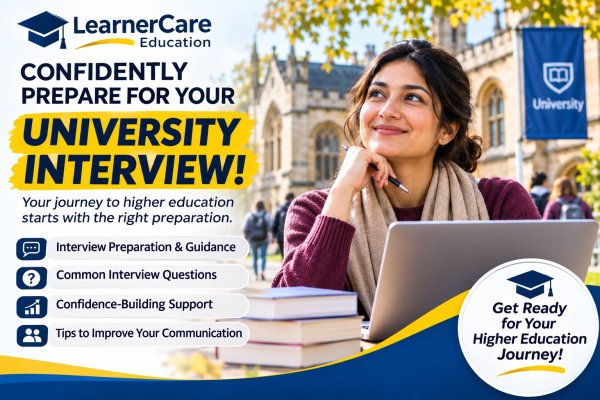
Our support includes:
University interview preparation and guidance.
Practice with common university interview questions.
Confidence-building support.
Communication and presentation tips.
Guidance for mature student university applications.
Be prepared, stay confident and take the next step towards your future.
Contact LearnerCare Education today to discuss your university admission journey and find out how we can support you.